
News & Updates
NEWS
BIO International Convention
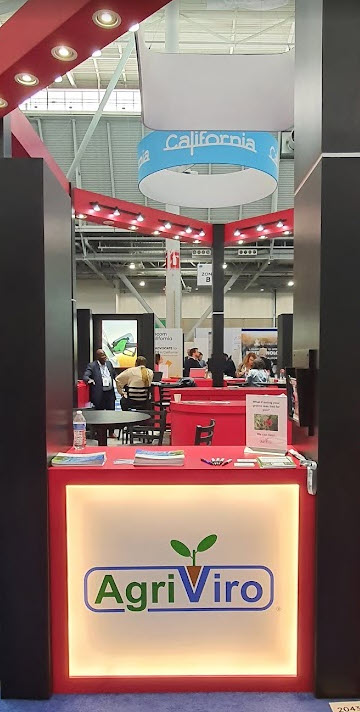
AgriViro at the BIO International Convention
The BIO International Convention is the world’s largest biotechnology event, bringing together over 20,000 global leaders, investors, researchers, and policymakers from across the life sciences ecosystem to network, share breakthroughs, and form partnerships.
AgriViro was honoured to participate as an invited exhibitor in the South African Pavilion, which reflects recognition of AgriViro’s standing in the African Biotech space.
The convention provided an exceptional platform to present AgriViro’s integrated biologicals capabilities to an international audience of investors, multinational Biotech companies, and industry leaders. Deep interest was expressed in AgriViro’s production infrastructure, biologicals pipeline, and positioning as Africa’s primary biologicals development and production hub, reinforcing the scale of the commercial opportunity ahead.
NEWS
AgriViro Biologicals Portfolio Enters Final Regulatory Approval Stage
2026
AgriViro’s portfolio of microbial biologicals — comprising bacterial and viral biopesticides validated across diverse African agro-climatic zones — has entered the final stages of regulatory approval. Products are classified as biorationals, with defined modes of action, proven selectivity, and a minimal environmental footprint meeting the standards of global and African regulators. AgriViro is currently in discussions with multinational companies and regional distributors regarding first-to-market supply agreements. Investor and partnership enquiries are welcome.
AgriViro Completes Industrial Fermentation Scale-Up. Production Platform Operational
UPDATE: AgriViro has since relocated to a purpose-built campus in the Modderfontein Industrial Corridor, Johannesburg, housing a fully integrated R&D Discovery Platform and Production Platform. The fermentation scale-up described in this article is now operational at the new premises, with capabilities significantly expanded. The article below describes the beginning of that journey.
AgriViro, a biotechnology company with deep expertise in microbial fermentation, is proud to announce the expansion of its submerged fermentation capacity for the production of microbial biopesticides. The company has entered the final stages of setting up a new purpose-built facility that will allow for increased production of biopesticides.
The expansion of AgriViro’s submerged microbial fermentation capacity will accelerate product development and enable the company to produce a wide range of biopesticides, which can be used to control pests in agriculture and horticulture. The new facility features advanced equipment and technology that can be used to produce microbial biomass at a large scale.
AgriViro’s investment in submerged liquid fermentation infrastructure reflects its commitment to producing biologicals at commercial scale, with the batch-to-batch consistency and formulation quality required for regulatory approval and market entry.
UPDATE (2026): AgriViro’s Production Platform is now fully operational at industrial pilot scale. The biologicals portfolio produced through this facility is in the final stages of regulatory approval, with commercial market entry imminent.

FAQ
Why is there demand for alternatives to chemical pesticides?
The global demand for safe and environmentally sustainable agricultural products has been growing rapidly in recent years. With the increasing awareness of the health and environmental risks associated with toxic pesticides, many governments worldwide have imposed strict regulations on their use. This trend and growing consumer demand for safe and healthy foods has created a significant opportunity for biopesticides, which are eco-friendly and safe alternatives to traditional chemical pesticides. With is microbial biopesticide portfolio, AgriViro is well-positioned to meet the growing demand for eco-friendly biopesticides.
What are biopesticides?
Biopesticides are a type of pesticide that are derived from natural materials such as plants, bacteria, fungi, or other organisms. They are used to control pests, including insects, weeds, and diseases, in agriculture, forestry, and public health.
Biopesticides work by exploiting natural mechanisms and interactions between the pest and its environment, such as disrupting the pest’s life cycle or feeding behaviour, or by directly suppressing the pest population. They are less harmful to non-target organisms, such as humans, wildlife, and beneficial insects, compared to conventional chemical pesticides.
Biopesticides can be classified into three main categories:
- Microbial biopesticides: These are derived from microorganisms such as bacteria, fungi, viruses, and protozoa. They can control pests by infecting them with a pathogen, producing toxic metabolites, or stimulating the plant’s natural defence mechanisms.
- Plant-Incorporated Protectants (PIPs): These are substances that plants produce from genetic modifications that make them less susceptible to pests or diseases. For example, genetically modified crops that produce Bacillus thuringiensis toxins to control insect pests.
- Biochemical biopesticides: These are naturally occurring substances, such as plant extracts or pheromones, that control pests by interfering with their behaviour or physiology.
Biopesticides are a valuable tool in integrated pest management (IPM) programs, which aim to reduce the reliance on chemical pesticides and promote sustainable agriculture practices.
Are microbial biopesticides safe to use?
Microbial biopesticides offer several positive safety aspects, including:
- Reduced risk to non-target organisms: Microbial biopesticides are often more selective in their mode of action, meaning they target specific pests without harming other organisms in the environment. This can reduce the risk of harm to beneficial insects, wildlife, and humans.
- Shorter persistence in the environment: Microbial biopesticides tend to break down more quickly in the environment compared to conventional chemical pesticides. This can reduce the risk of long-term environmental contamination and exposure to non-target organisms.
- Low risk of developing resistance: Microbial biopesticides are often based on living organisms, which makes it more difficult for pests to develop resistance. This means that microbial biopesticides can be used as part of a sustainable pest management program to reduce reliance on chemical pesticides.
- Low or no risk of residue build up: Microbial biopesticides do not leave behind persistent residues that can accumulate in the environment or on crops. This reduces the risk of exposure to humans or animals who may come into contact with the residues.
Overall, microbial biopesticides offer several positive safety aspects that make them a useful tool for managing pests while minimizing risks to non-target organisms and the environment.
WHAT IS THE CURRENT STATUS OF AGRIVIRO'S REGULATORY APPROVAL?
AgriViro’s biologicals portfolio is in the final stages of regulatory approval in South Africa. Our products are classified as biorationals — with defined modes of action, proven selectivity, and a minimal environmental footprint. Multi-site field trial data across African agro-climatic zones has been compiled and submitted. Commercial market entry is imminent.
WHAT PARTNERSHIP MODELS DOES AGRIVIRO SUPPORT?
AgriViro supports three primary partnership models: (1) investment partnerships; (2) licensing and co-development agreements with multinational AgBio companies seeking African market entry or access to our production platform; and (3) distribution partnerships with established regional distributors seeking a first-mover advantage with a regulatory-ready biologicals portfolio. See our Partner With Us page or contact us to discuss.
WHAT ARE BIORATIONALS AND HOW DO AGRIVIRO'S PRODUCTS QUALIFY?
Biorationals are pest control products with a defined biological or biochemical mode of action, demonstrated selectivity for target organisms, and a proven low-impact profile for non-target organisms and the environment.
AgriViro’s products are formally classified as biorationals. They meet each criterion: defined modes of action, proven selectivity, and a minimal environmental footprint — validated across multiple pest groups, crop categories, and African agro-climatic zones.